
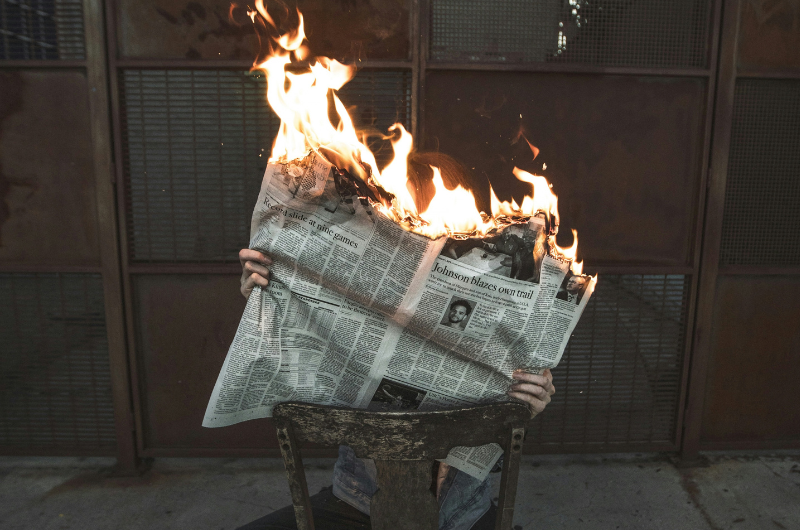
The course of British history could have been so different.
During the Battle of Hastings, rumours started to circulate that William had died. Some of his men, spooked by the reports, began quitting the field. Luckily for him, the Duke of Normandy saw what was happening and swiftly made clear he was very much alive. His men rallied, Harold (possibly) received an arrow to the eye, and the rest, as they say, is history.
Reading the accounts of the battle, there’s little agreement on where those false reports originated. Was it a rumour generated inside William’s army and caused by inaccurate information in the heat of battle? Or was it a deliberate falsehood created by Harold’s side in the hope of turning the tide?
The former would be misinformation: false information spread without the intention to deceive. The latter would be a medieval case of disinformation: lies created and spread deliberately to mislead. (And that’s before we get to the question of whether the Bayeux Tapestry, currently on display at the British Museum, is essentially Norman propaganda.)
A thousand years later, it’s not just would-be monarchs or governments facing this challenge. Mis- and disinformation is becoming an urgent problem for companies too.
Deepfake images, video, and audio are far easier to produce – and far harder to spot – than even two years ago thanks to the growing capabilities of AI. Both dis- and misinformation spread much quicker than they used to because of the pace of social media and the power of its algorithms.
At the same time, the information eco-system has fragmented, less news passes through traditional editorial gatekeepers, and algorithms are designed to perpetuate shock and outrage rather than truth.
The impacts of this can be seen in three recent real-life examples of mis- and disinformation.
A wave of influencers filmed themselves symbolically casting off health-tracking rings made by Ōura over concerns the healthcare company was selling private data to Palantir. The claim was false, but criticism became intense enough that CEO Tom Hale took to TikTok to address the issue.
In another example, trials of Bovaer, a feed that lowers methane emissions from dairy cows, were suspended in the UK by Arla following a wave of conspiracy theories and misinformation about its effects.
And in 2022 a fake Twitter account, which had paid for the then-new blue tick verification system, falsely claimed the American pharma company Eli Lilly was offering free insulin. Thousands of people were duped and the company’s stock price suffered a significant hit.
Cases of serious reputational and commercial harm like these are becoming increasingly frequent. Dealing with them isn’t as simple as just trying to remove false information, whack-a-mole style, however.
Instead, mis- and disinformation needs to be thought of in a similar manner to other major crisis incidents – a cyberattack for instance. That means good preparation and planning, a clear response approach should it happen, and a sense of what and how you may need to rebuild afterward.
In particular, it’s worth doing the following, now, before you face a mis- or dis- scenario.
- Put it on the radar: appoint a “Mis and Dis” lead in corporate affairs, identify a Board-level representative, and add mis- and disinformation to your risk register.
- Understand your landscape: audit areas of current vulnerability and preparedness, examine and address your GEO profile, and look into the efficacy of watermarking or provenance-tracking assets.
- Get your tools ready: ringfence budget for bespoke monitoring, potential dark site creation, and rapid digital deployment. And explore mis- and disinformation detection tools, especially AI models that identify manipulated media.
- Build resilience across the organisation: Enhance the literacy of your team, but also your wider employee and customer base. Add this topic to your media training and crisis simulation programmes. And discuss it with your Chief Technology/Information Officer, CoSec, and General Counsel.
Read more from Headland: Insights & News