

The Summit
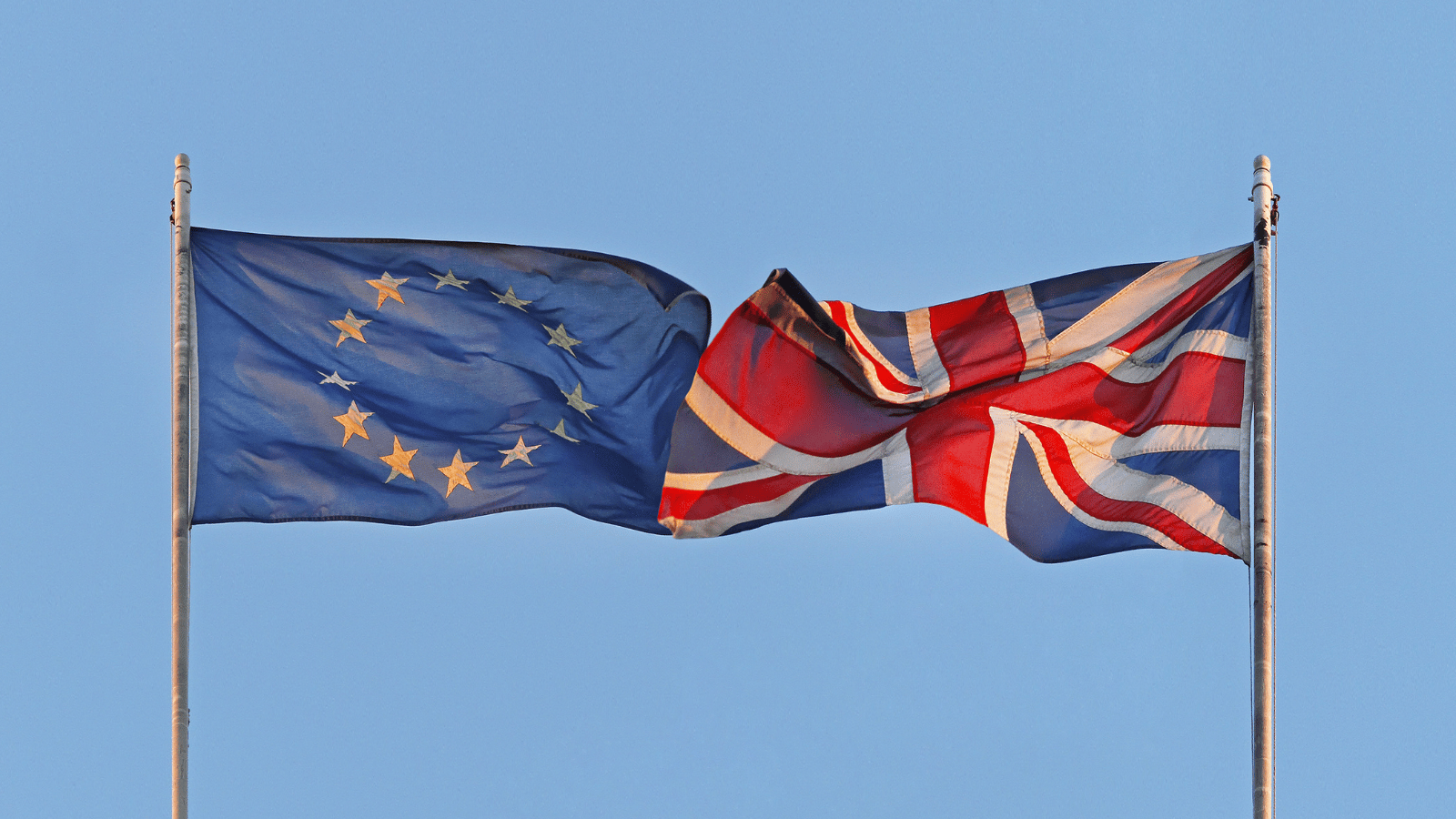
As winter sets in on the continent, the two EU Presidents, António Costa and Ursula von der Leyen, will welcome UK Prime Minister Andy Burnham to Brussels this Friday, 20th November, for a much-heralded summit. While public messaging will pitch this as the end of the post-Brexit chill, in its place sits something decidedly colder: pure transactional realpolitik.
This summit does not herald a return for the UK to the single market, let alone the customs union. What it will do is formalise a shift to sector-by-sector alignment where access for the UK is granted only as fast as London matches EU rules.
This is Brussels setting the agenda, controlling the pace and maintaining its leverage. Burnham will arrive in Brussels not as an equal partner redesigning the architecture of Europe, but with a checklist of things to secure to retain access to EU markets. The three areas set to form part of the deal agreed at the summit are: (i) a political deal to link emissions trading schemes; (ii) an agreement on food and agricultural standards – the Sanitary and Phytosanitary (SPS) agreement; and (iii) the youth mobility scheme and university tuition fees. We can also expect the UK to make its case to be included as the EU’s definition of ‘Made in Europe’ narrows, but no commitment from Brussels at this stage.
Beyond 20th November: negotiating the future relationship
The view from London
When Burnham announced at the Labour Party Conference that he would lay out “different options” for Britain’s long-term relationship with the EU at the summit, there was surprise in the hall. Here was a Labour Leader, who had committed to Keir Starmer’s manifesto to honour Brexit, signalling a return could be on the cards.
Inside No. 10, there are three guiding reasons for this recent shift:
- Economic necessity: Greater EU alignment remains one of the simplest weapons in the Prime Minister’s arsenal to drive growth.
- Voter sentiment: Public sentiment on the EU has continued to shift, with recent polling finding 56% support the UK rejoining the EU, compared to 30% against. Burnham has been emboldened to argue that the current agreement is “not good enough for Britain” but there is considerable Cabinet disagreement on reopening this battle.
- Burnham’s views: Although the No. 10 press operation has reiterated that Burnham is “not leaning either way” and he has written to the Cabinet to avoid advocating for “specific options”, Burnham has stated his desire to see the UK rejoin the EU in his lifetime.
Burnham’s focus in the days leading up to the summit is on talking up the importance of the deal set to be reached. But he will also use his speech at the Lord Mayor’s Banquet this evening to reiterate that “the Brexit we were given has not worked. We have lost more than we have gained”.
Beyond the summit, Burnham has set out that the Government will explore options for the UK’s future relationship – retaining the existing settlement, joining the customs union, joining the single market, or full EU membership.
It is increasingly likely that the next Labour Party manifesto will set out the Prime Minister’s preference. This position may involve a future referendum, or more controversially could rely on the mandate sought at the next General Election.
The view from Brussels
The era of Brussels seeking to “punish” London to discourage others from treading the same path has quietly expired, displaced by war on the continent, an American retreat and Chinese industrial overcapacity. The mood music is undeniably warmer. French President Emmanuel Macron and Spanish Prime Minister Pedro Sánchez have already made welcoming noises regarding Burnham’s softer stance on re-engagement, and the French foreign minister recently proclaimed the UK would be welcomed back into the single market with open arms.
But London should not mistake warmth for charity.
Large swathes of the Brussels machine remain scarred by 2016 and British political volatility. In the corridors of the European Commission and the Council, the operating principle for this summit remains inflexible: cherished EU market access carries an invoice, payable in regulatory alignment, reciprocity, political discipline and cash.
The summit will officially praise the Trade and Cooperation Agreement (TCA) as an ambitious framework, but the working assumption among EU officials is that any concessions granted to London at this point and thereafter must be legally bulletproof and irreversible – insulated against future political reversals in Westminster. Bureaucrats in Brussels have clocked there is far from cross-party consensus on Burnham’s trial balloon, let alone inside the Labour Party itself.
Crucially, the UK still struggles for airtime on leaders’ agendas. Burnham is competing for headspace with issues ranging from bruising negotiations over the next long-term EU budget (MFF) to China relations and Ukraine.
The world has become more complicated in the 10 years since Brexit. And the EU has changed as well. It still believes in a multilateral, globalised world, but is decidedly more introspective than before, and much more inclined to a muscular approach to protecting its interests.
Business reaction
10 years on from the Brexit vote, the business community is not united on the UK getting closer to the EU. In some sectors, such as manufacturing, there is a more clear-cut, positive case. But for others, who have spent years shaping legislative changes in the UK and invested heavily in adapting to the new reality, the position is more nuanced. Many businesses are waiting to engage until the Prime Minister’s proposals become more concrete and we have a better sense of what the EU will seek in return.
In terms of what this could all mean for UK plc, the calculus seems clear. If Burnham gets his way, this marks the beginning of the end of British regulatory divergence. Watching what happens in Brussels, as well as developing an ability to influence it, is going to become more important again.
Read more from Headland: Insights & News