
Insight
The Expectation-Performance Gap
A new approach to diagnosing, tracking and reporting reputation
Reputations are relative. Stakeholders judge a business relative to how they expect that business to behave. The bar is different for each company and measuring performance alone misses that important context.
Our new approach focuses on the gap between what stakeholders expect and how that business actually delivers. A big gap can signal risk. A small or non-existent gap provides a potential strength or campaigning opportunity.
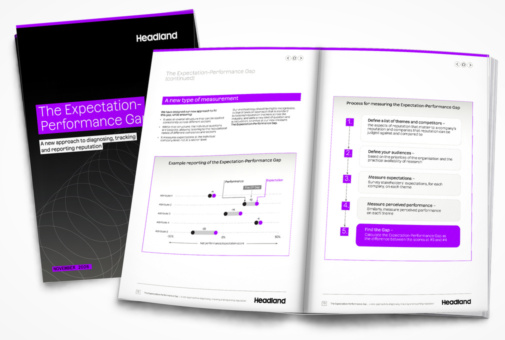
NEW RESEARCH: The Expectation-Performance Gap: The full report
Corporate Affairs teams face competing demands, conflicting stakeholder expectations and growing pressure to demonstrate their value. But traditional reputation tracking often fails to show which issues matter most and where to prioritise.
Drawing on new research among more than 2,000 UK consumers, our report introduces the Expectation-Performance Gap: a new way of diagnosing, tracking and reporting reputation.
Through research into UK fashion retailers and airlines, the report explores how measuring the gap between expectations and perceived performance can reveal overlooked risks, identify strengths and give Corporate Affairs leaders a clearer basis for action at Executive and Board level.
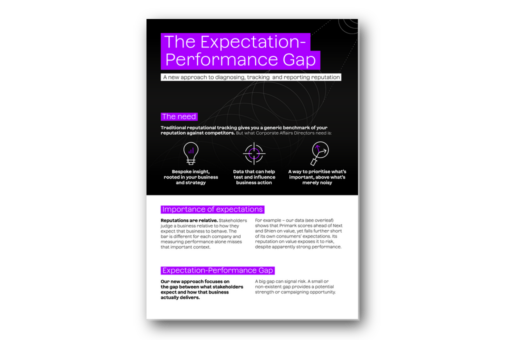
AT A GLANCE: The Expectation-Performance Gap: An overview
Traditional reputation tracking provides a generic benchmark against competitors. But Corporate Affairs Directors need bespoke insight rooted in their business and strategy, data that can help influence business action and a way to prioritise what’s important above what’s merely noisy.
Our two-page overview introduces the Expectation-Performance Gap, explains why stakeholder expectations matter and shows the approach in action through new consumer research into UK fashion retailers.
Authors
